Run the PDLanalysis in RainbowStats
Home | Blog | Command Reference | Launch RainbowStats
"Inflation is always and everywhere a monetary phenomenon.” — Milton Friedman
Will an oil shock cause inflation? In the short run, yes. In the longer run, it depends—primarily on how the Fed responds to a weakening economy.
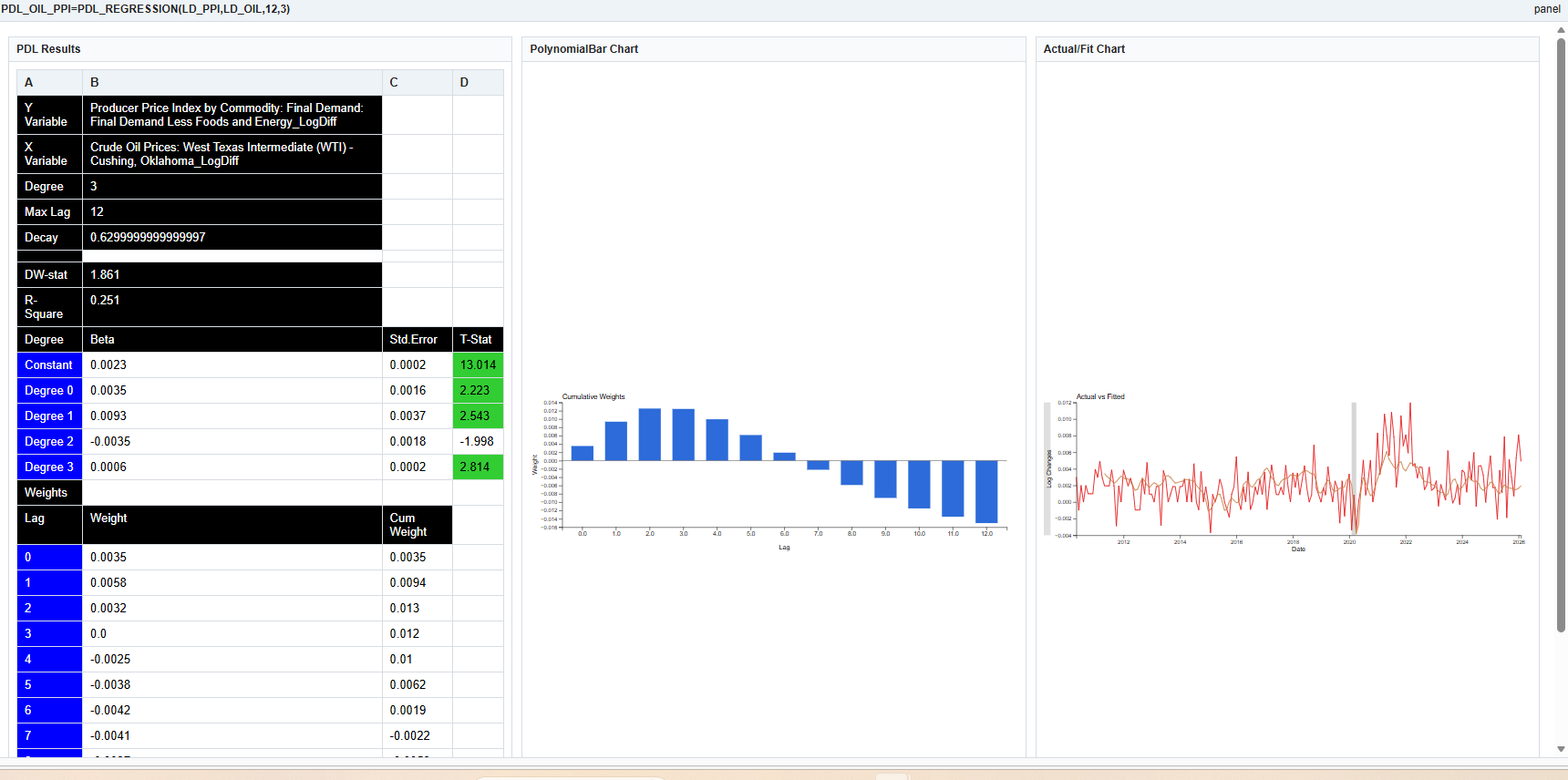
This series takes a closer look at that question through a personal study of oil prices and the Producer Price Index (PPI), beginning with a Polynomial Distributed Lag (PDL) model.
The PDL framework lets us trace how an oil shock flows through time: not just the immediate impact, but the delayed and potentially reversing effects that follow.
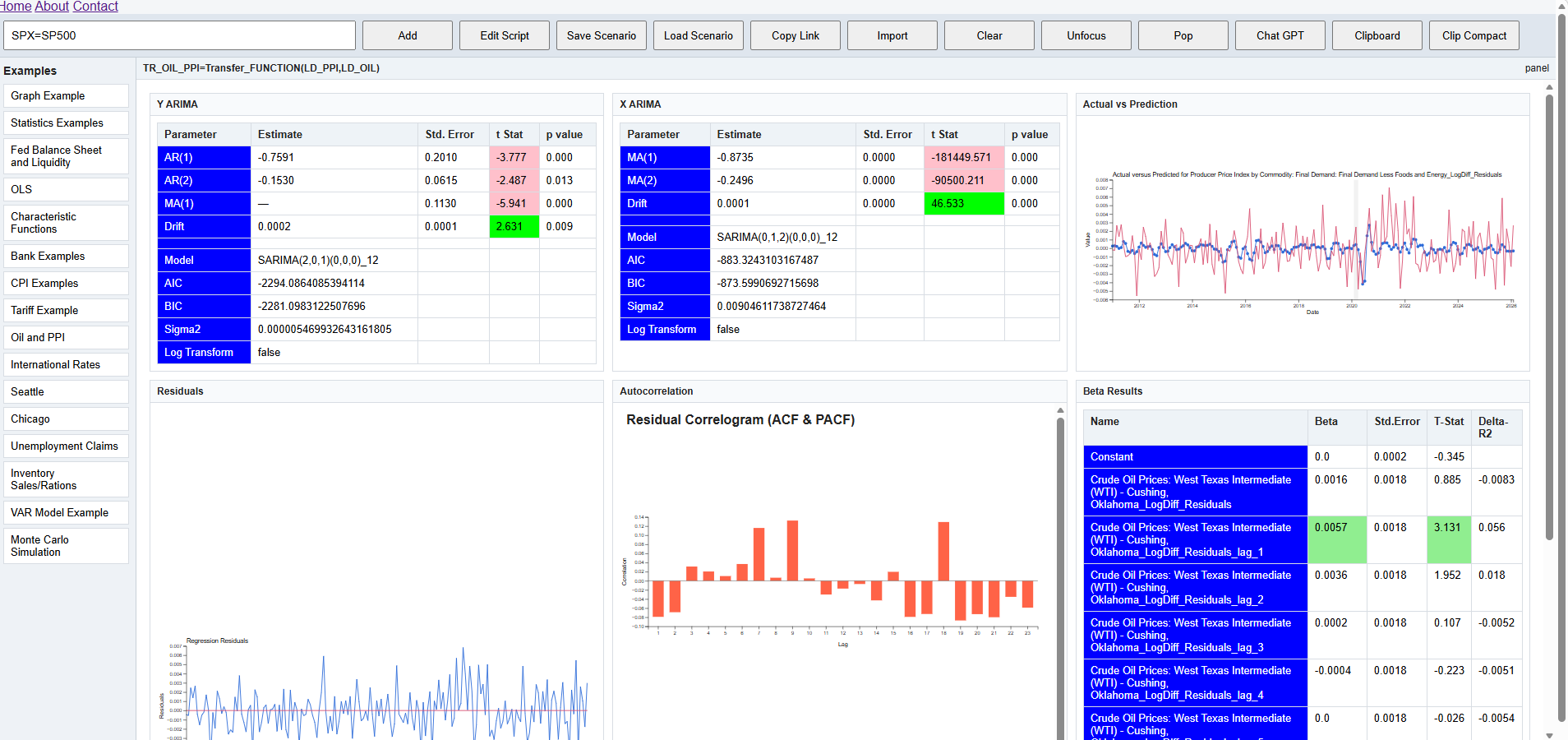
Using a transfer function model, we can trace how oil shocks feed into PPI over time. The lag structure is clear—but the overall elasticity is surprisingly small.
The estimates suggest that a 20% increase in oil raises PPI by only about 0.2%.
That result surprised me. Is the U.S. simply less dependent on oil than we assume?
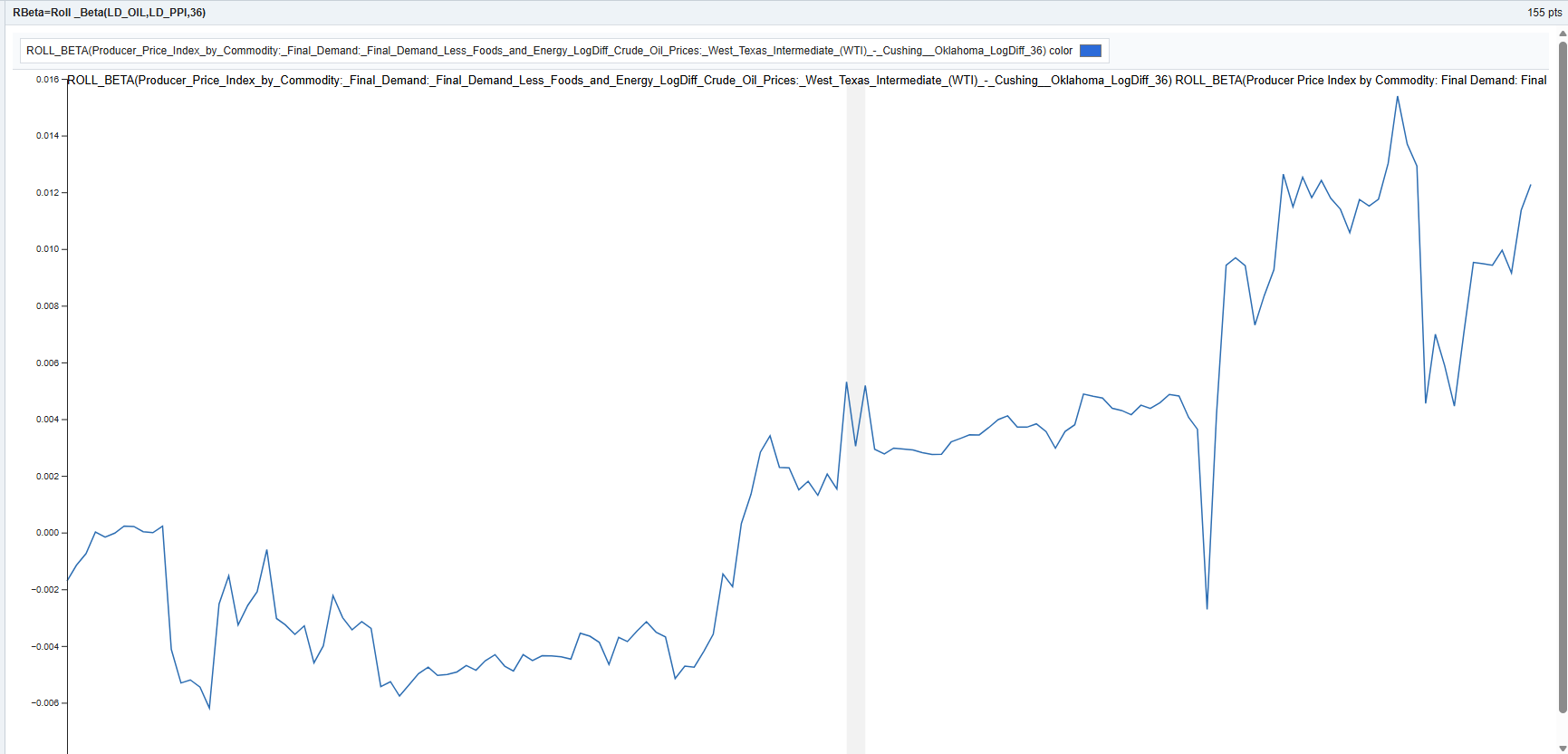
Another way to approach this is through a rolling beta of PPI changes relative to oil.
The contemporaneous beta has been rising over time, suggesting PPI has become more sensitive to oil shocks. Yet even with that increase, the overall elasticity remains modest.
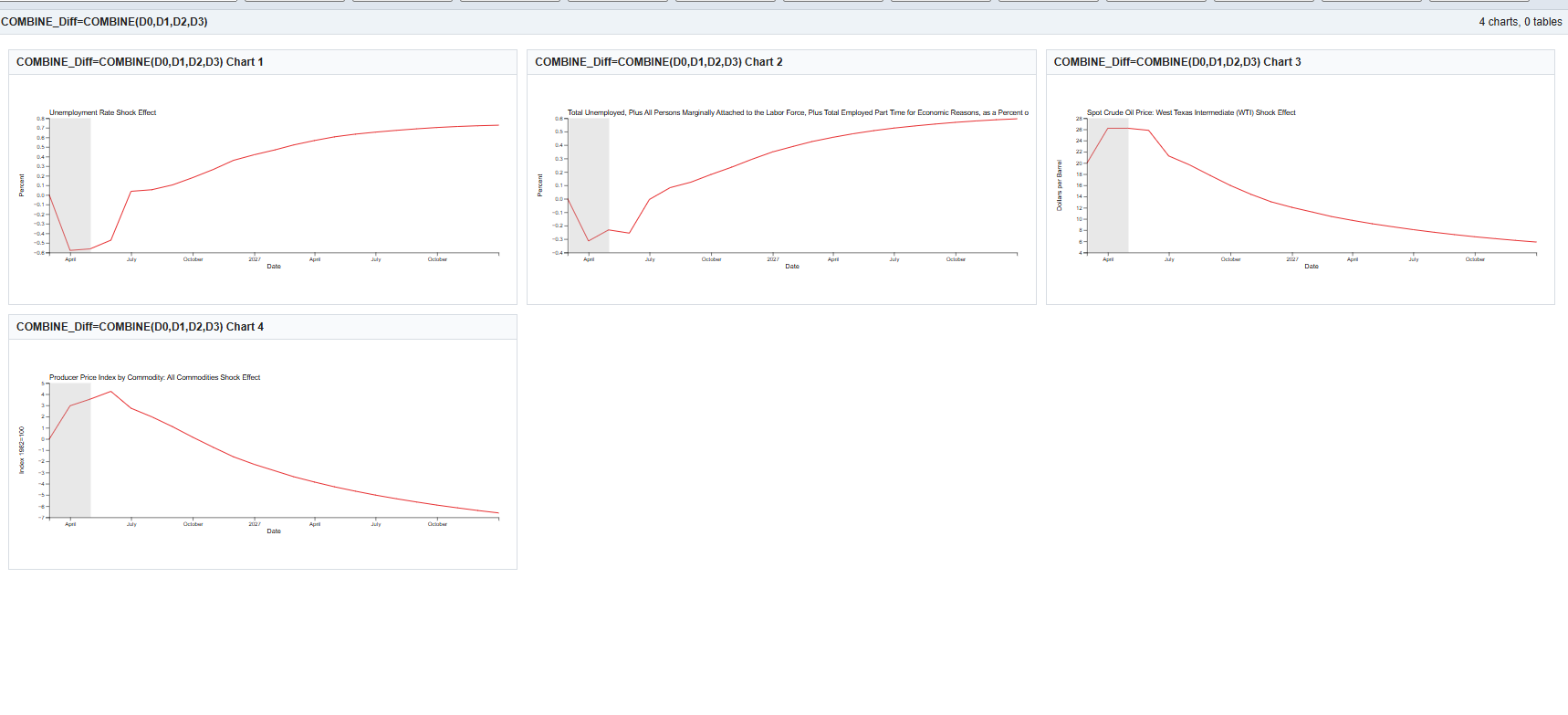
I wasn’t fully convinced, so this weekend I built a VAR (Vector Autoregression) model to simulate the effects of a $20 increase in oil.
The results are telling. The oil shock propagates across the system—lifting PPI, but also feeding into higher unemployment and a rise in marginally attached workers.
That labor channel matters. Higher energy costs act like a tax on both firms and consumers: margins compress, real incomes fall, and demand softens. The result is a gradual weakening in labor markets.
In the model, that demand destruction offsets part of the initial inflation impulse. With no accompanying increase in money supply, the long-run effect on inflation is dampened.
In short: Oil shocks push prices up—but they also slow the economy, and that second effect works in the opposite direction.
RainbowStats continues to evolve as a platform for combining financial modeling, econometrics, and interactive visualization.